


The fnTBL system has 2 executables:
The parameter file is used to store all the parameters that do not change often during the development of a particular task. We found it to be useful, because it reduces significantly the number of command-line parameters that need to be specified, and modifying one parameter does not require the program to be recompiled (as it would if the parameters would be hard-wired in the program).
Its format is as follows:

 in them. For instance,
  is a legal value if the
variable MAIN was previously defined. I found this to be useful if one wants to
define a main directory, where all the other files reside; when one changes the
location of the main directory, only one line needs to be modified.
is a legal value if the
variable MAIN was previously defined. I found this to be useful if one wants to
define a main directory, where all the other files reside; when one changes the
location of the main directory, only one line needs to be modified.
The following are legal examples of lines in the parameter file:
MAIN = /remote/bigram/usr/home/rflorian/workdir/research/data/mtbl-toolkit/text_chunking;The example is actually extracted from a parameter file associated with the fnTBL POS-tagger. A complete set of valid parameters are provided in the Appendix. The most important ones are:
FILE_TEMPLATE = ${MAIN}/file.templ;
RULE_TEMPLATES = ${MAIN}/lexical_predicates.richer.templ;
REASONABLE_SPLIT = 10;
REASONABLE_DT_SPLIT = 5;
EMPTY_LINES_ARE_SEPARATORS = 0;
ELIMINATION_THRESHOLD = 0;
This section will briefly describe the file formats used with the fnTBL toolkit. In all the following files, the lines starting with a '#' sign are considered as comments and, therefore, are ignored.
Both the training file and the test file need to be in a particular format for the fnTBL tools to work properly. The format requires that each sample be on a separate line, with the features separated by white space (spaces or tabular characters). In addition, if the samples are interdependent (like in the POS tagging case), and organized into ``blocks'' (i.e. sentences), the blocks need to be separated by a blank line.
Here's an example of such a file:
Revenue NN NN
rose VBD VBD
5 CD CD
% NN NN
to TO TO
$ $ $
282 NN CD
million CD CD
from IN IN
$ $ $
268.3 NN CD
million CD CD
. . .
The DT DT
drop NN NN
in IN IN
earnings NNS NNS
had VBD VBD
been VBN VBN
anticipated VBN VBN
by IN IN
most JJS JJS
Wall NNP NNP
Street NNP NNP
analysts NNS NNS
, , ,
but CC CC
the DT DT
results NNS NNS
were VBD VBD
reported VBD VBN
after IN IN
the DT DT
market NN NN
closed VBD VBD
. . .
There are 3 fields for each word (in this case)3.1:
Both the training and test data should have this format. Some tools that compute the most likely tag given the word (for instance) are provided with the fnTBL distribution and are described in the Appendix section.
The names of the fields associated with the samples are defined in a file whose name is specified in the parameter file. The name of the parameter is FILE_TEMPLATES and the file contained in this parameter should have the following format:

 is the name of the
  feature associated with the sample;
 is the name of the
  ``guess'' associated with the sample;
 is the name of the
``truth'' associated with the sample; there are the same number of
is the name of the
``truth'' associated with the sample; there are the same number of  and
and  features.
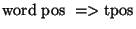
In this example, the feature is word, pos is the name of the ``guess'' of the system at some point in time, and tpos is the name of the truth. If one wants to perform a simultaneous classification of POS tagging and text chunking (see [FN01]), then the corresponding file should be:

Because the fnTBL is a general-purpose tool, the user needs to specify the rule templates - in other words, to describe the kind of rules the system will try to learn. The description is done by the templates: a template defines which features are checked when a transformation is proposed. For instance, if one wants to implement a bigram look-up, then the template consists of the previous word and the current word.
The predicate of a rule is created as a conjunction of smaller, atomic, predicates that can be as simple as feature identities; other types verify if the word ends/begins with a specific suffix/prefix and yet others verify the identity of one of the previous words. This particular choice of conjunction is selected for:
The format of a rule template is

 are the atomic
predicates, with
are the atomic
predicates, with  as
arguments
as
arguments
 are the classifications
that are to be changed by the rule, and are chosen from
are the classifications
that are to be changed by the rule, and are chosen from 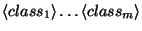


Motivated by some of the problems TBL has been applied to, some types of atomic predicates have been implemented. Here is the list of how they can be specified:

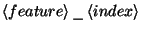
 can be negative as well;
there is a restriction that the number has to be an integer belonging to the
range
can be negative as well;
there is a restriction that the number has to be an integer belonging to the
range ![$ \left[ -128,127\right] $](3_ System Description.files/img73.png) ;
;
![$\displaystyle \left\langle feature\right\rangle :\left[ \left\langle index\_start\right\rangle ,\left\langle index\_end\right\rangle \right] $](3_ System Description.files/img74.png)
![$\displaystyle word:\left[ 1,3\right] =the\textrm{ returns true on a sample }s_{...
... s_{i+1}\textrm{ or }s_{i+2}\textrm{ or }s_{i+3}\textrm{ contains the word }the$](3_ System Description.files/img75.png)

 will
return true on a given sample
will
return true on a given sample  if and only if one of
the features
if and only if one of
the features  or
or  of sample is
 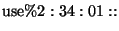 3.3.
3.3. To make life easier, an additional construction is allowed in the rule file format - definitions of a rule placeholder:

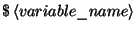 in the rule template
file. This construction helps mostly with ``set'' atomic predicates (the
predicate will return true if any one of a set of features has a given value).
The following is an rule template example taken from the PP-attachment problem:
in the rule template
file. This construction helps mostly with ``set'' atomic predicates (the
predicate will return true if any one of a set of features has a given value).
The following is an rule template example taken from the PP-attachment problem:
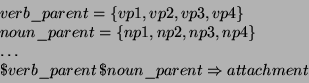
 can replace the
predicate
can replace the
predicate 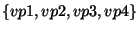 in subsequent rules. The
rule template
in subsequent rules. The
rule template  will
try to predict the attachment of a preposition using wordnet parents of the verb
and the first noun of the sample.
will
try to predict the attachment of a preposition using wordnet parents of the verb
and the first noun of the sample.
Both the main programs from the fnTBL toolkit (fnTBL and fnTBL-learn) use rule files files which list the rules learned by the system. These rules have meaningful linguistic information in them, and can be easily read and understood. The format they are presented in is similar to the one of the template files, rules being actually instantiated templates. The format is:

 is an atomic predicate,
 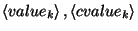 are
valid values for the respective predicates and
are
valid values for the respective predicates and  are the classes to be
changed. For instance, again for the POS tagging problem, the rule
are the classes to be
changed. For instance, again for the POS tagging problem, the rule


One less usual parameter for the fnTBL algorithm is the constraints file. The TBL algorithm suffers from one relatively major problem - since it's output is not probabilistic, it has no mechanism of estimating the posterior probability of a class given a sample

 . To avoid this problem,
the TBL algorithm proposed originally by Eric Brill enforced that no new classes
should be assigned to samples: if a sample has been seen in training, then a
rule that would change the classification to a classification that has never
been seen with that particular sample is not allowed to apply.
. To avoid this problem,
the TBL algorithm proposed originally by Eric Brill enforced that no new classes
should be assigned to samples: if a sample has been seen in training, then a
rule that would change the classification to a classification that has never
been seen with that particular sample is not allowed to apply.
We are relaxing here this constraint by allowing the user to specify the set of allowable associations feature-class for a set of examples, by using constraint files. If a particular feature is not present in these constraint files, then a rule that examines that feature can change it as it sees fit. However, if the feature is present in the file, only rules that change it to some specified class are allowed to apply to it. This mechanism allows the user to specify, for instance, that only words which were seen enough times in the data are not allowed to be associated with new classes.
The format of the constraint file is:

 are features on
which the conditioning needs to be done,
are features on
which the conditioning needs to be done, 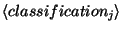 is the classification
that is constrained and
is the classification
that is constrained and
 is the file containing the
constraints - a file containing a list of the pairs that need be constrained.
For instance, in the POS tagging example, a constraint in the constraint file
could be
is the file containing the
constraints - a file containing a list of the pairs that need be constrained.
For instance, in the POS tagging example, a constraint in the constraint file
could be

saying NN VBGAny combination of features that does not appear in the constraint file are not constrained at all, and it's possible for those samples to be assigned any classification. Also, it is useful to note that the constraints are stackable; in other words, first a sample is checked against all the constraints - if it passes, then the class change is performed.
the DT
their PRP$
them PRP