


Next: Computer
Platform Up: System
Description Previous: Tree Grafting
Working with and developing a large grammar is a challenging process, and
the importance of having good visualization tools cannot be over-emphasized.
Currently the XTAG system has X-windows based tools for viewing and updating the
morphological and syntactic databases ([#!karp92!#,#!EgediMartin94!#]). These
are available in both ASCII and binary-encoded database format. The ASCII format
is well-suited for various UNIX utilities (awk, sed, grep) while the database
format is used for fast access during program execution. However even the ASCII
formatted representation is not well-suited for human readability. An X-windows
interface for the databases allows users to easily examine them. Searching for
specific information on certain fields of the syntactic database is also
available. Also, the interface allows a user to insert, delete and update any
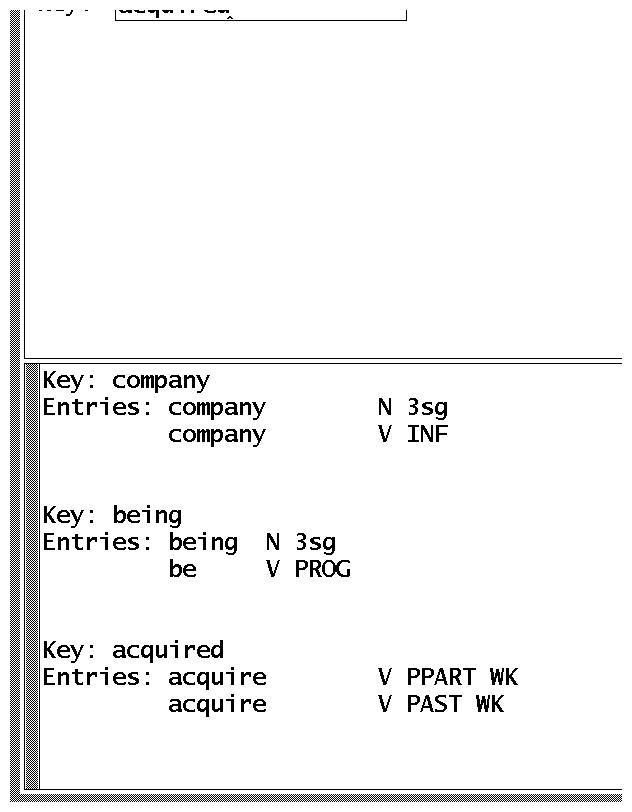
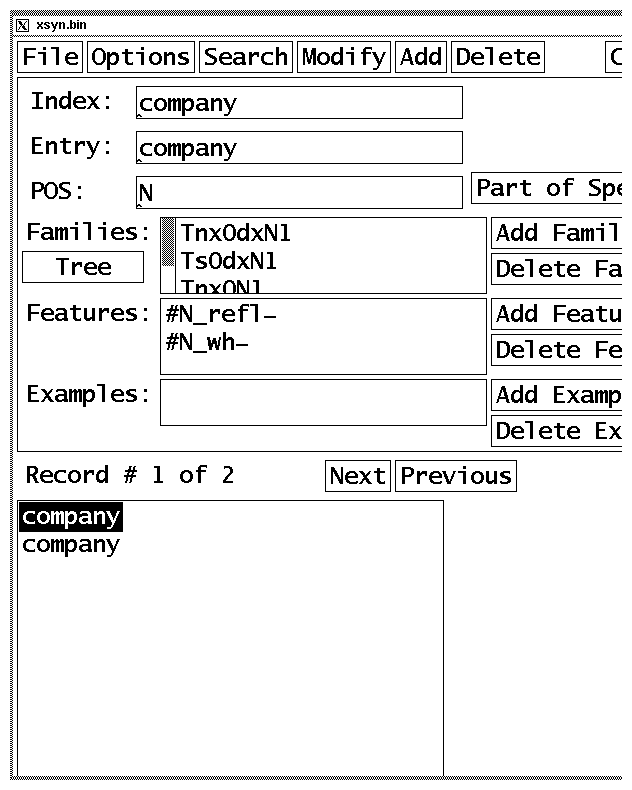
information in the databases. Figure 3.3(a)
shows the interface for the morphology database and Figure 3.3(b)
shows the interface for the syntactic database.
 |
 |
| (a) Morphology database |
(b) Syntactic database |
- [Interfaces database]{Interfaces to the database maintenance tools
XTAG also has a parsing and grammar development interface ([#!PSJ92!#]). This
interface includes a tree editor, the ability to vary parameters in the parser,
work with multiple grammars and/or parsers, and use metarules for more efficient
tree editing and construction ([#!becker94!#]). The interface is shown in
Figure 3.4.
It has the following features:
- Menu-based facility for creating and modifying tree files and loading
grammar files.
- User controlled parser parameters, including the root category (main S,
embedded S, NP, etc.), and the use of the tagger (on/off/retry on failure).
- Storage/retrieval facilities for elementary and parsed trees.
- The production of postscript files corresponding to elementary and parsed
trees.
- Graphical displays of tree and feature data structures, including a scroll
`web' for large tree structures.
- Mouse-based tree editor for creating and modifying trees and feature
structures.
- Hand combination of trees by adjunction or substitution for use in
diagnosing grammar problems.
- Metarule tool for automatic aid to the generation of trees by using
tree-based transformation rules
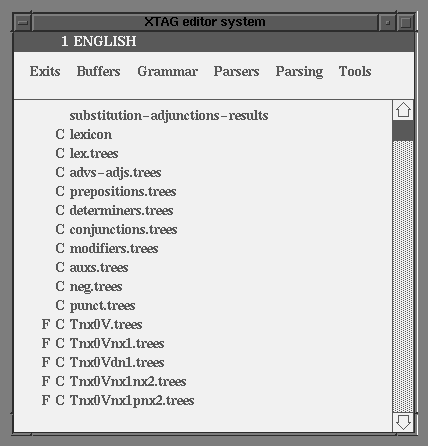
- [XTAG Interface]{Interface to the XTAG system
Next: Computer
Platform Up: System
Description Previous: Tree Grafting
XTAG Project
http://www.cis.upenn.edu/~xtag/